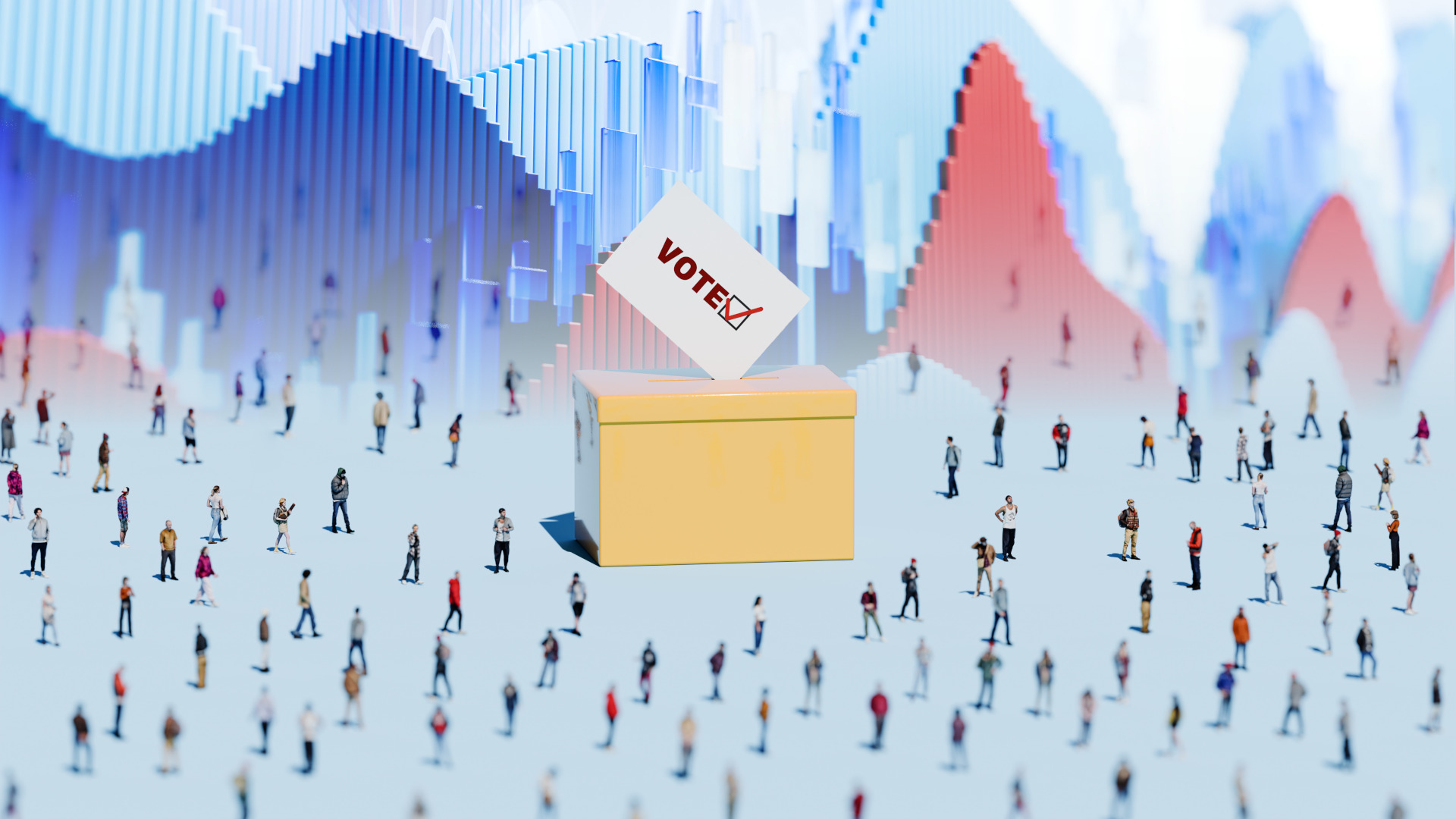
A new POLITICO/Public First poll finds that more than half of U.S. adults would not consider placing a bet on a prediction market, with resistance to wagering on political outcomes particularly pronounced, even as nearly $700 million has already traded on 2028 presidential election markets.[1] In Florida's 2026 governor contest, David Jolly raised $255,376 across his campaign and political committee accounts in the first 12 days of June while state Rep. Dotie Joseph entered the Democratic primary field.[4]
The POLITICO Poll — conducted in partnership with Public First, an independent polling company headquartered in London — finds that more than 50 percent of Americans said they would not consider placing a bet on a prediction market.[1] Respondents expressed resistance to wagering being legal on political events such as what President Donald Trump will say, who he will pardon, and the outcome of the 2028 presidential election.[1]
Younger Americans diverge sharply from the overall population: 12 percent of respondents aged 18–24 said they had placed a prediction-market wager, matching the rate among those aged 25–34, compared to 6 percent of the broader group.[1] Among 18-to-24-year-olds, 30 percent said they would consider placing a prediction-market bet, versus 17 percent of all respondents.[1]
Sen. Jeff Merkley (D-OR) told POLITICO: "It's a bad bet for democracy. If you allow election betting, you now have very affluent folks who can bet millions of dollars and simultaneously affect the outcome of an election through dark money. … That type of corruption in our elections is deadly."[1]
Despite public skepticism, prediction-market activity has grown substantially in 2026. Polymarket's FIFA World Cup tournament winner market alone generated more than $2.5 billion in trading volume, with one trader earning $9.24 million in a single day after correctly predicting four match outcomes.[3] Nearly $700 million has already traded on 2028 presidential election markets across Kalshi and Polymarket's international platform.[1]
Most economists who spoke to CNN said they would not want to see prediction markets banned, noting that sports and pop-culture bets improve market liquidity and forecasting accuracy even amid concerns about addiction.[2] A New York Federal Reserve study found that credit delinquencies, especially among people under 40, have surged in the more than 30 states that legalized sports gambling since 2018, when the Supreme Court overturned a federal ban.[2]
In Florida's 2026 governor contest, Democrat David Jolly raised a combined $255,376 between June 1 and June 12 — $137,784 to his campaign account and $118,592 to his Florida 2026 political committee — without recording an immediate fundraising bump following his announcement of former Rep. Gwen Graham as his running mate.[4] Barbara Stiefel, described by Florida Politics as a longtime Democratic donor, contributed $100,000 to the political committee on June 11.[4]
State Rep. Dotie Joseph entered the Democratic primary in early June, days after Orange County Mayor Jerry Demings withdrew from the race following a prostate cancer diagnosis.[4] With less than two months before the primary, Jolly remains the leading fundraiser in the Democratic field.[4]

References
- [1]Poll: Americans draw a new line in the betting bonanza sweeping over Wall Street — politics. · Politico
- [2]Economists have long pushed for prediction markets. The reality is not what they'd hoped for · CNN
- [3]Crypto SWOT: Prediction markets have experienced a surge in activity during the FIFA World Cup · Kitco
- [4]David Jolly banks $255K more as Dotie Joseph launches late long-shot gubernatorial bid · Florida Politics